The Underground Railroad
Abolitionist Joseph Brewster and the Underground Railroad*
in Pro-Slavery New York City, 1820s-30s
*The Underground Railroad Wasn’t a Railroad. And It Wasn’t Underground.
It was a secret network of people and places – homes, churches, shops — that evolved over generations to help freedom-seekers escape to the North. By the mid-19th century, it was known as the Underground Railroad, derived from the launch of railroad, in the 1830s. Railroad terminology also offered a useful code, e.g, “stations” and “conductors.”
|
… |
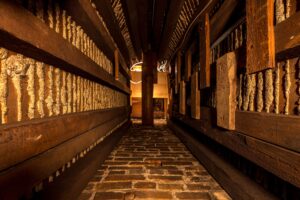 View of the passageway, from below. Crude ladder steps on right. Photo by Max Touhey |
Three years of research has revealed that wealthy merchant Joseph Brewster, a fervent abolitionist, designed and built the Merchant’s House in 1832 to include a hidden passageway (photo right) to shelter the enslaved seeking their freedom.
Even after New York State abolished slavery, in 1827,
the city’s economy remained deeply entangled with the slave South.
Merchants, insurers, financiers, manufacturers, and shipping firms all profited from buying, selling, and transporting enslaved people. Manufacturers were able to offer low prices since many raw materials were produced using forced labor, to the benefit of newly middle-class consumers. The City was firmly – and conveniently – pro-slavery.
For abolitionists fighting fervently for the end of slavery, abolitionist activity was extremely dangerous — of necessity, carried out in secret.
Assisting freedom seekers was a federal crime under the 1793 Fugitive Slave Act. Free Black New Yorkers were at constant risk of kidnapping and sale into Southern slavery. Both Black and white abolitionists faced intimidation and mob violence; few dared to openly voice their anti-slavery beliefs.
Pro-slavery sentiment exploded in the summer of 1834 when rioters attacked African-Americans and white anti-slavery activists, as well as homes, churches, and buildings that were associated with anti-slavery work. Thousands of rioters flooded the streets of this very neighborhood, targeting prominent abolitionists.
It was in this dangerous climate that abolitionist Joseph Brewster built the Merchant’s House – and included a hidden passageway.
|
… |
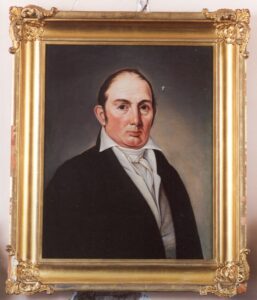 Portrait of Joseph Brewster, 1787-1851 |
In 1832, Joseph Brewster (1787–1851) built this Late Federal–Greek Revival row house as a home for himself and his wife, Susan (1784-1859). A prosperous hatter with two shops on Broadway, Brewster moved to the fashionable Bond Street neighborhood, as did many of his contemporaries.
In the 1820s, as the Evangelical Christian movement known as the Second Great Awakening swept the countyr, Brewster experienced a profound religious conversion. To create a more perfect world, social reform movements addressed moral issues such as slavery, alcohol consumption, and women’s rights. Inspired to take action, Brewster became a passionate advocate for temperance and abolition.
By the 1830s, abolition became the most pressing social reform movement, as slavery was considered both a moral outrage and an obstacle to spreading the gospel.
____________________________________________
By the 1830s, abolition had became the most pressing social reform movement; still, anti-slavery work was seen as radical and dangerous, carried out in secret and fragmented. Free Black New Yorkers led the most active efforts, forming church-based networks, mutual aid societies, and safe houses. White supporters, including Evangelical social reformers, supported the movement mainly through moral advocacy, fundraising, and legal defense.
A major shift began in 1833 with the founding of the American Anti-Slavery Society (AASS), the first national organization to call for “immediate emancipation” with full civil rights. Headquartered in New York, the integrated Society marked the beginning of an organized abolitionist movement in the United States.
-
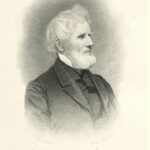
- Arthur Tappan, c. 1870, engraving by J. Andrews
-
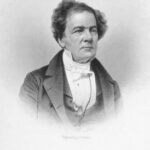
- Lewis Tappan, c. 1840, engraving by John C. Buttre
Businessmen, brothers, and philanthropists Arthur and Lewis Tappan, founders of the American Anti-Slavery Society, spent their fortunes advocating for immediate abolition.
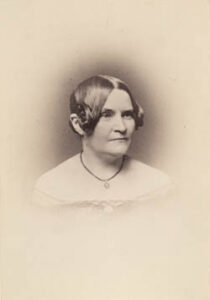 Lydia Maria Child, c. 1830, Courtesy of The Massachusetts Historical Society. |
In 1833, famed author, activist, and journalist Lydia Maria Child published An Appeal in Favor of that Class of Americans Called Africans, the first book-length work advocating for abolition. Despite living in “free” Massachusetts, she lost her income, publisher, and social relationships as a result of taking a public stance against slavery.
|
. |
|
… |
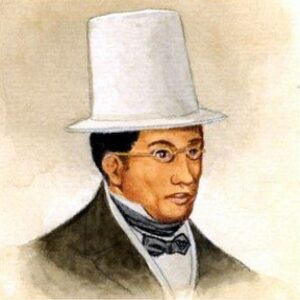 |
In 1835, David Ruggles, a Black anti-slavery activist from Preston, CT, the same hamlet as Joseph Brewster, established the New York Committee of Vigilance, an integrated organization that took direct action to protect the rights of free Black New Yorkers and assist self-emancipators on their escape to freedom. This development marks a critical turning point to an increasingly coordinated network of safe houses – the Underground Railroad network.
Ruggles was one of the rare few who risked speaking out publicly about this highly dangerous work, claiming to have assisted hundreds of freedom seekers through a coordinated network of safe-houses.


